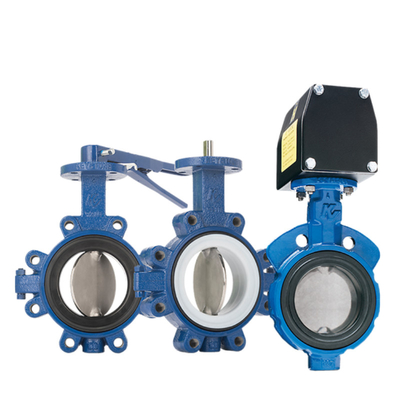
Severe Service Control Valves: Managing High Pressure Drops, Noise, and Erosion
Introduction
Control valves used in demanding process conditions face challenges that go beyond ordinary flow regulation. A large pressure drop, high fluid velocity, flashing, cavitation, or aerodynamic noise can place considerable stress on internal components and downstream piping.
These conditions are common in applications such as power generation, refining, oil and gas production, and chemical processing. A conventional control valve may struggle if its trim is not designed for the actual pressure, temperature, and fluid conditions.
Severe service control valves address these challenges through specialized internal geometry, pressure management, material selection, and valve construction. The objective is not simply to withstand high pressure, but to control the process while limiting damage, noise, and unplanned maintenance.
1. Why High Pressure Drops Create Problems
A control valve regulates flow by introducing a restriction into the process line. When fluid passes through this restriction, its pressure and velocity change. A large pressure difference across the valve can produce high local velocities and complex flow patterns.
The consequences depend on the fluid phase and operating conditions.
For liquid service, the local pressure may fall below the liquid's vapor pressure, creating vapor bubbles. If downstream pressure recovers above the vapor pressure, these bubbles may collapse, causing cavitation. Repeated collapse near metal surfaces can produce noise, vibration, and localized damage.
If downstream pressure remains below the vapor pressure, vapor may persist in the downstream flow. This condition is known as flashing and can cause severe erosion as the high-velocity two-phase mixture passes through the valve and piping.
For gas and steam service, large pressure reductions can create high velocities and aerodynamic noise. Under certain conditions, the flow may approach sonic velocity in parts of the valve. Excessive noise and vibration can affect nearby equipment, piping, and operating personnel.
These mechanisms are different, so the valve solution must be selected according to the actual service rather than pressure drop alone.
2. How Specialized Trim Manages Pressure Drop
One approach is to divide a large pressure reduction into several smaller stages instead of allowing most of the pressure drop to occur across one restriction.
Multistage trim uses a series of flow restrictions and expansions to manage pressure reduction. Depending on the design, this can reduce local velocity peaks, control pressure recovery, and limit the formation or collapse of vapor bubbles.
However, multistage trim is not automatically the best solution for every application. The design must account for the available pressure differential, required flow range, fluid properties, and the possibility of solids blocking narrow passages.
For clean liquid service with a significant cavitation risk, Fisher Cavitrol III trim is one example of a specialized design that stages pressure reduction through engineered cage passages. For services with particles or a greater plugging risk, Fisher Dirty Service Trim (DST) is designed to manage cavitating conditions while allowing specified particulate to pass through.
These examples illustrate why severe-service selection requires more than choosing a valve with a higher pressure rating. The internal flow path must be appropriate for the actual fluid and pressure conditions.

3. Reducing Noise in Gas and Steam Applications
Noise in gas or steam control valves is often associated with high velocity, turbulence, and pressure reduction through the valve. Simply installing a larger valve does not necessarily solve the problem and may introduce control difficulties if the valve becomes oversized for normal flow.
Noise-attenuation trim is designed to alter the flow path and reduce the intensity of the aerodynamic noise generated inside the valve. Depending on the application, the design may distribute the pressure drop across multiple passages or use specialized cage geometry to manage local flow velocities.
For example, Fisher Whisper Trim solutions are intended for applications requiring aerodynamic noise reduction. The appropriate configuration depends on the gas or steam properties, pressure ratio, flow rate, and required noise limits.
Noise assessment should also consider the complete installation. Downstream piping, reducers, fittings, pipe wall characteristics, and operating conditions can influence the sound level measured outside the valve. Therefore, specifying low-noise trim should be part of an overall system evaluation rather than an isolated product choice.
4. Erosion Resistance and Material Selection
Erosion can occur when high-velocity fluid, droplets, or entrained particles repeatedly strike internal surfaces. Damage is especially concerning when the flow path directs particles toward the valve plug, seat, cage, or downstream piping.
The most suitable approach depends on the source of erosion.
-
High-velocity clean fluid: Review the flow path, local velocity, and pressure-reduction strategy.
-
Fluid containing solids: Consider passage size, plugging risk, particle characteristics, and trim geometry.
-
Corrosive media: Confirm that wetted materials are compatible with the process chemistry.
-
High-temperature service: Check the temperature limits of trim materials, seals, and other pressure-containing components.
-
Frequent throttling: Assess how the plug and seat are exposed to the flow throughout the operating range.
Harder materials or specialized coatings may improve wear resistance in selected services, but they cannot compensate for an unsuitable flow path. Material selection and hydraulic design need to be evaluated together.
Maintenance history can also provide valuable evidence. If damage repeatedly occurs at the same location, engineers should examine the flow pattern and operating conditions instead of simply replacing the damaged components with the same specification.
5. Dirty Service Requires a Different Approach
A trim designed for clean liquid service may contain narrow passages that can become blocked by sand, scale, catalyst particles, or other contaminants.
In these applications, the challenge is to manage pressure reduction without making the valve excessively vulnerable to plugging. Larger flow passages and specialized internal arrangements may be more suitable than a conventional anti-cavitation cage.
Fisher Dirty Service Trim is one example designed for cavitating, particle-containing service. Its flow restrictions and expansions are arranged to manage pressure reduction while allowing specified particles to pass.
Before selecting a solution, engineers should confirm the type, size, and concentration of solids, as well as the likelihood of deposits forming during normal operation. Filtration, flushing arrangements, and maintenance access may also influence the final design.
No single trim design is suitable for every dirty or erosive service.
6. How to Select a Severe Service Control Valve
The selection process should begin with process data, not with a product name. The following information is particularly important:
| Selection factor |
Information to confirm |
| Pressure conditions |
Upstream and downstream pressures across the operating range |
| Process medium |
Liquid, gas, steam, multiphase fluid, or fluid containing solids |
| Temperature |
Normal, minimum, and maximum operating temperatures |
| Flow requirements |
Minimum, normal, and maximum flow rates |
| Damage mechanism |
Cavitation, flashing, aerodynamic noise, erosion, or corrosion |
| Control requirements |
Required flow characteristic, rangeability, and shutoff performance |
| Installation |
Valve size, pressure class, piping arrangement, and available space |
| Maintenance |
Access to trim, spare parts, and expected inspection intervals |
These details help determine whether the application needs pressure-staging trim, noise attenuation, erosion-resistant materials, or a design that accommodates particles.
Engineers should also verify actuator capability, because the required operating force can change with valve size, pressure conditions, and trim configuration.
7. Common Selection Mistakes
Several mistakes can lead to poor performance even when a valve appears suitable on paper.
Selecting by pressure rating alone: A valve may meet the required pressure class but still have unsuitable trim for cavitation, noise, or erosion.
Using anti-cavitation trim in dirty service without checking passage size: Small passages may be vulnerable to plugging if the medium contains particles.
Ignoring minimum flow conditions: The most damaging operating condition may occur at low travel, not at maximum flow. Trim performance should be checked across the full operating range.
Replacing damaged trim without reviewing the cause: Repeated erosion or cavitation damage may indicate that the original sizing or trim selection needs to be reconsidered.
Treating noise as a valve-only problem: Downstream piping and installation conditions can contribute to the overall noise level.
Avoiding these mistakes requires reviewing both the valve design and the process conditions under which it will operate.
Conclusion
Severe service control valves are designed for applications where high pressure drops, noise, cavitation, flashing, or erosion can compromise normal valve performance. Specialized trim can manage pressure reduction, alter flow patterns, reduce noise, or accommodate contaminated fluids, but each design has its own operating limits.
Products such as Fisher Cavitrol III, Whisper Trim, and Dirty Service Trim illustrate different approaches to these challenges. The correct choice depends on the process medium, pressure conditions, flow range, damage mechanism, and maintenance requirements.
For demanding industrial applications, accurate process data and a clear understanding of the failure mechanism are essential to selecting a reliable control valve. A well-matched design can help reduce premature damage, improve process control, and support more predictable maintenance planning.
Looking for a control valve for high-pressure-drop or severe-service conditions? Provide the process medium, upstream and downstream pressures, temperature, and flow range for a more focused technical review.